The event organised by CEC in collaboration with the European Economic and Social Committee (EESC), brought together experts, policymakers, and cooperative leaders to discuss the role of Worker Buyouts (WBOs) in fostering a more inclusive and resilient European economy.
Giuseppe Guerini, EESC Member and President of CECOP-CICOPA, set the tone by highlighting the urgent need for an European industrial strategy centred on inclusion and peace. He stressed that cooperative and social economy enterprises are both competitive and essential to Europe’s future.
Sc’Opara introduced REWIND designed to support cooperative takeovers by empowering employees, employers, and trainers with the tools and knowledge needed to collaborate.
IDEC discussed the pilot phase, sparking deep discussions around cooperative leadership and talent retention.
Speha Fresia presented research across six countries, identifying legal gaps, financing barriers, and regional disparities—and offering clear recommendations, including inclusive governance, targeted education, and legal reform.
Participants from multiple countries brought diverse perspectives
In France, a participant highlighted the need to engage financial institutions and shift administrative mindsets about WBOs.
A participant explained that in Spain there is a clear legal distinction between cooperatives and social enterprises—where at least 60% of employees must be from at-risk groups—leading to significant growth in regions like Catalonia and the Basque Country.
An Irish cooperative football club representative raised thought-provoking ideas: using shared business services, introducing cooperative education in schools, and leveraging Ireland’s credit unions to fund WBOs.
A Belgian researcher stressed the difference between basic worker participation and true workplace democracy, where employees actively co-own and co-govern.
Expert Insights
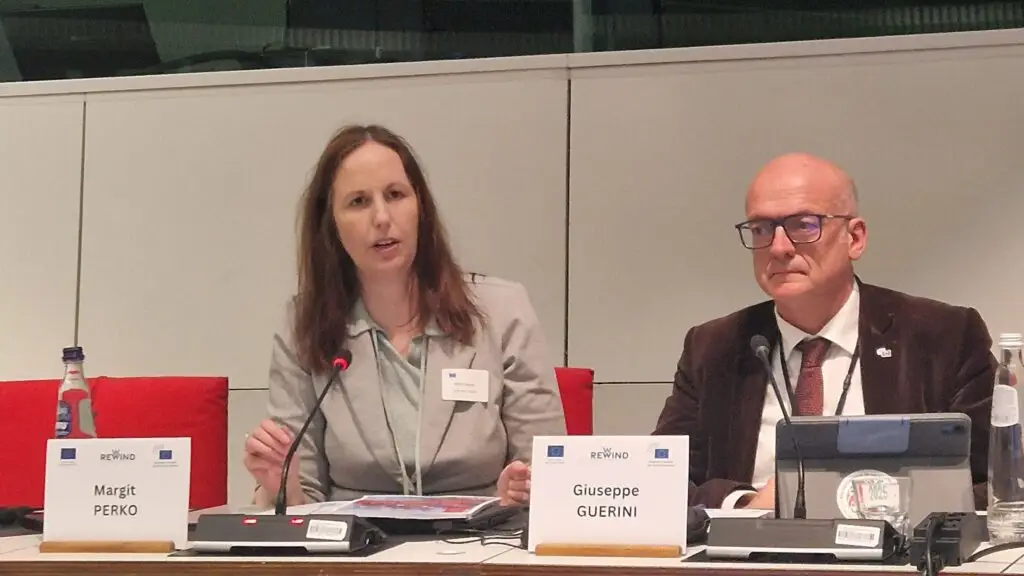
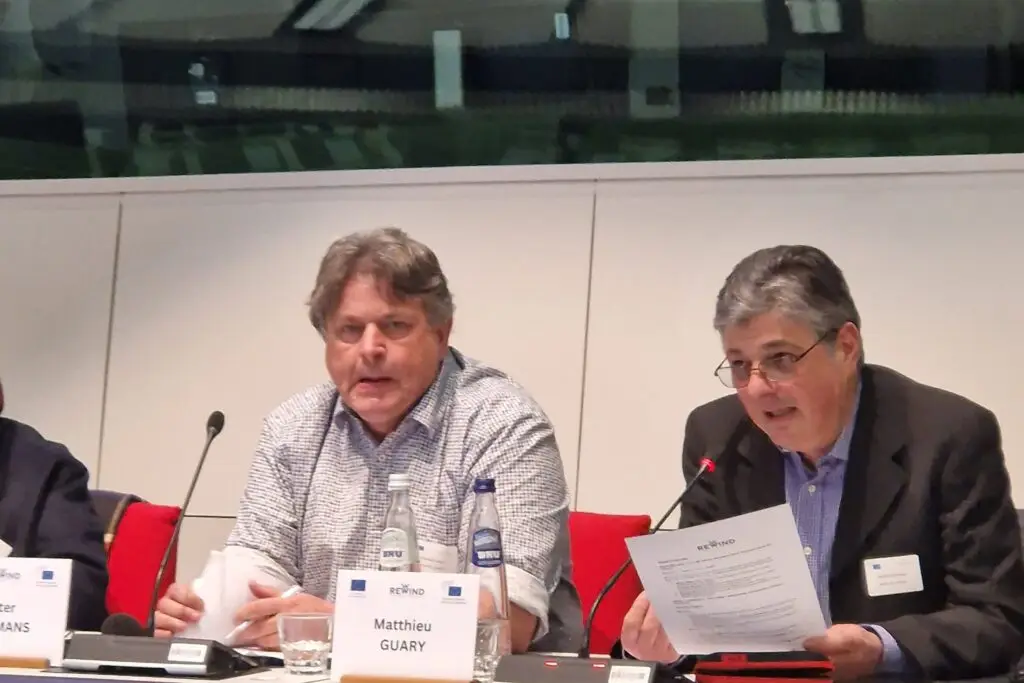
In a session on best practices, Matthieu Guary (Petra Patrimonia) emphasized that all business transfers are critical—whether traditional or through Worker Buyouts (WBOs). However, WBOs come with unique challenges: securing financial partners and raising institutional awareness. According to Guary, the core issue is training—workers need new skills to succeed as owners, and the REWIND platform is already helping to define these key competencies.
Margit Perko (European Commission, DG EMPL) framed WBOs within the EU Social Economy Action Plan, noting that while countries like Italy, Spain, and Portugal have supportive legal frameworks, others still face legal uncertainty and high costs. The EU encourages mutual learning, knowledge-sharing platforms, and financial tools like microfinance to address these gaps. WBOs are especially relevant as many European SMEs face succession issues in ageing economies.
Giuseppe Guerini reflected on Italy’s 40-year experience with WBOs under the Marcora Law, which has led to 316 buyouts, the preservation of 11,000 jobs, and a 79% survival rate after 10 years. Key to this success is CFI, a cooperative finance institution. Guerini outlined a five-step method: diagnosing the crisis, identifying leadership, restructuring governance, leveraging financial tools, and conducting market analysis.
From Belgium, Peter Bosmans (Febecoop) stressed the need for structured democratic ownership. Workers must be prepared to serve on boards, which requires training in governance, leadership, HR, marketing, communication, and collaborative management. While WBOs remain rare in Belgium, Bosmans called for a mindset shift beyond traditional work-capital models.
Key takeways
- Legal gaps, limited finance, and low awareness remain major barriers across the EU.
- Italy’s long-standing WBO model shows high survival rates and job preservation.
- Worker Buyouts offer a sustainable solution to business succession in aging societies—but only if workers are empowered, trained, and supported.
- Projects like REWIND are essential to mainstreaming WBOs as a viable, democratic, and inclusive business model.
- Greater visibility, legal clarity, and mindset shifts are needed to scale WBOs in Europe.